Your symptoms are
a message
Coping skills can quiet them for a while. Here, we work out what they’re saying, so they can finally let go.
Book a free consultPsychoanalytic therapy · MA & FL
We work through the root causes of your suffering, so you can break the patterns that keep coming back and live with more freedom and fulfillment.
Fifteen minutes, by phone. No commitment.
Licensed in Massachusetts #10001743 · Florida telehealth #TPMC8655
What brings people here
The same pattern with different people, or one hard relationship.
A worry that colors each day, even when life is going fine.
A heaviness or numbness that you can’t quite account for.
Something from the past that keeps showing up in the present.
You know what you need to do, and keep finding reasons to wait.
Even when things go well, something still feels missing.
Also common
These are only some of the reasons people come. Yours may not be listed, and you don’t need a name for it to begin.
Two people can have the same symptom, like anxiety, for completely different reasons. So the work is shaped around you: we work through what is driving your symptoms, so they stop running your life.
What can change
Change usually starts small and builds. Further along, many people describe a new lightness, even enthusiasm, for their own life.
What if your most stubborn problem is actually a solution in disguise?
Approach
In this work, your words lead the way. I listen to what you have to say about your experience, without deciding ahead of time what it means. You’re invited to say whatever comes to mind, even the things you’d never say anywhere else. As you do, old patterns start to loosen, often before you can explain why.
Your symptoms and the things you keep repeating have a logic of their own. That’s why coping skills only go so far. Speaking about them, week after week, is how they start to change.
For exampleSay you wake up already tired, and nothing feels like much. Many approaches focus on easing how that feels, with gratitude lists, exercise, or more positive thinking. Some of that can help. Here, we would ask what the tiredness and numbness are about, what purpose they serve, and how they connect to the rest of your life and history. Over time, as you put it into words, the heaviness can begin to lift.
What a session is like
Psychoanalysis is a practice of speech. You say whatever comes to mind, including the parts that seem off-topic, petty, or embarrassing. I listen closely to what you say and to what you leave out, and I help you hear the parts of yourself that have gone quiet.
I use psychoanalytic techniques to bring what’s unconscious into view: pointing out a word that keeps returning, asking about a slip of the tongue, linking something you said today to something from weeks ago, or helping you read a dream for what it’s trying to say.
I’ll often end a session on a question instead of wrapping things up, because much of the work happens in the days afterward, while you’re still turning it over.
The premise
Symptoms, dreams, slips of the tongue, the patterns of a whole life: they’re all saying something if you’re willing to listen.
A note on fit
About
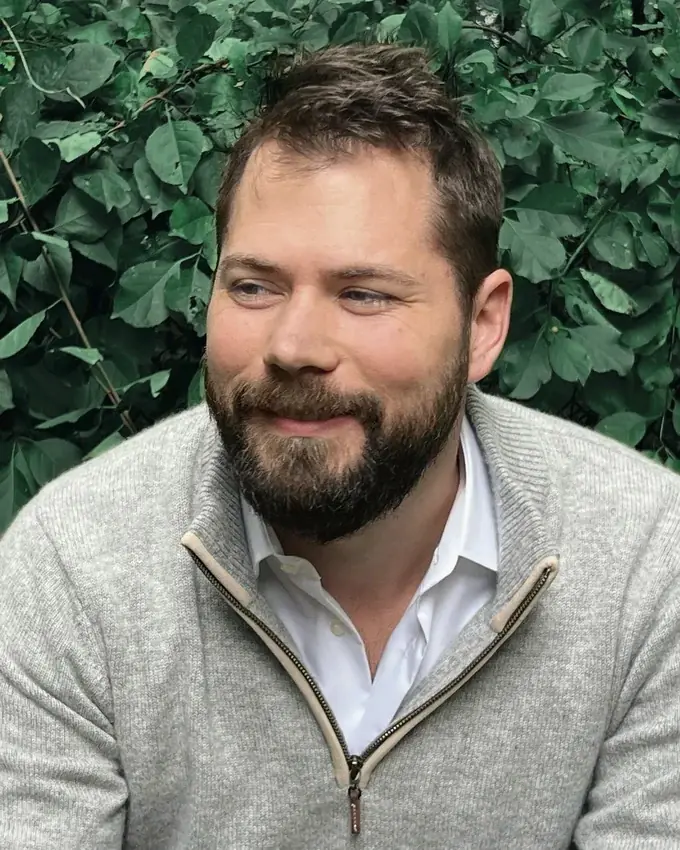
I’ve been through this process myself, so I know this work from both sides.
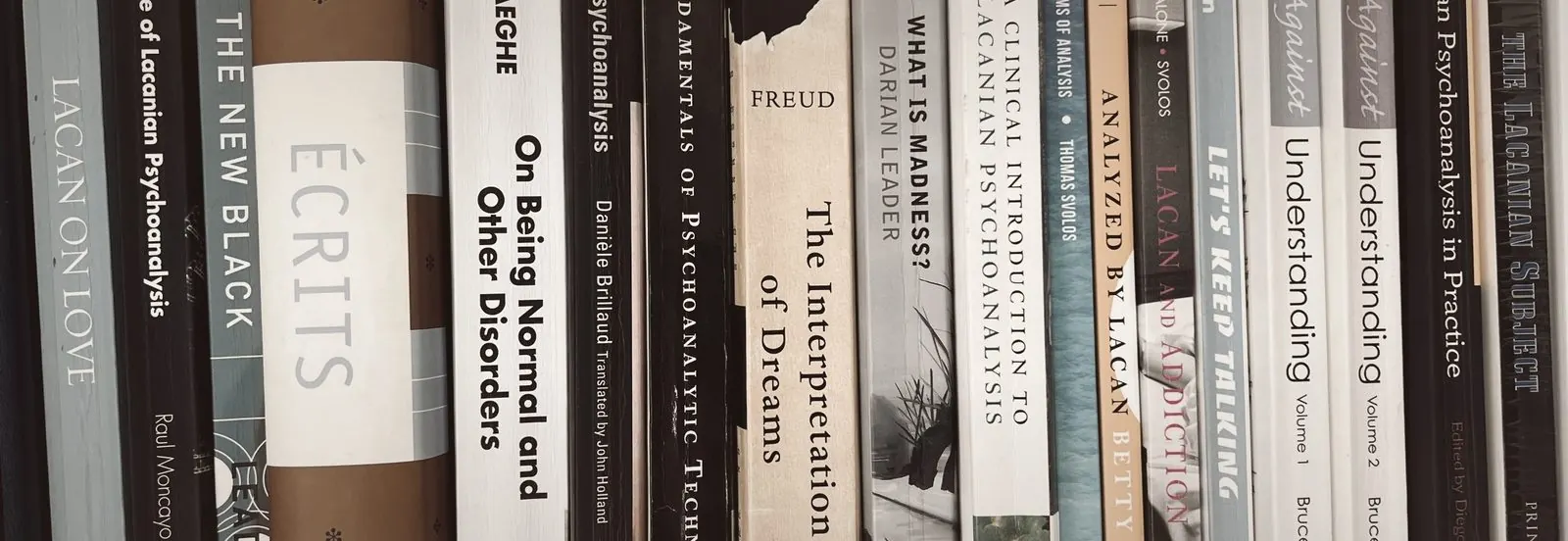
I’m David M. Freshwater, a licensed mental health counselor in Massachusetts (license #10001743), registered to provide telehealth in Florida (#TPMC8655). I have a master’s in mental health counseling from Brooklyn College and a bachelor’s in psychology from Columbia University. I’ve worked for nearly a decade in community mental health clinics and private practice, and I practice psychoanalysis in the Lacanian tradition.
Why do people choose this work? Many sense that their problems run deep and that another approach might not be enough. Many have tried other things that helped for a while. But the symptom kept coming back, sometimes in a new form, like a zombie that won’t stay down. And some are simply curious about the unconscious and their dreams. People who finish an analysis often describe it as life-changing, and as one of the most important things they ever did for themselves.
I talk about Lacanian psychoanalysis with 8,000+ followers on TikTok.
FAQ
That’s fine. You don’t need to know how it works to start. You just need to be curious about yourself.
We begin with what are called preliminary interviews. There’s no set number of them. I ask what brought you in, what you’ve already tried, and something of your history. Many people arrive asking me to fix something or tell them what to do. Gradually, that request tends to turn into a question of your own: what is this really about, and what do I actually want? There’s no sharp line where the interviews end and the deeper work begins. One slowly becomes the other.
At minimum, once a week, at a regularly scheduled time. Meeting more often deepens the process.
Typically twenty to fifty minutes. Sessions don’t run to the clock. When something important comes up, we stop there, so it stays with you. The fee is the same whatever the length.
There’s no set number of sessions and no end date. Many people notice early shifts within the first few weeks. You can stop at any time.
Remotely. By video or phone.
Individual adults, eighteen and over, who live in Massachusetts or Florida. I don’t see couples or families.
Live somewhere else? I’m looking into getting licensed in more states where there’s enough interest, so please don’t hesitate to reach out if you’d like to work with me.
$200 a session. If you come more than once a week, the per-session fee comes down.
I’m an out-of-network provider, so I don’t bill insurance directly. I can give you a monthly receipt, called a superbill, to submit to your insurance yourself. Whether they reimburse you depends on your plan.
The consult is a good place to ask it. Or call or text me at (786) 527-1616.
The consult
I’ll ask what’s going on and what you’ve already tried. You can ask me anything, including the awkward questions.
If it sounds like a fit, I’ll go over fees and we’ll book a first meeting. If it doesn’t, I’ll say so and try to point you somewhere better. I’d rather do that than take on someone I can’t help.
Rather not use a form? Call or text (786) 527-1616, or write to freshwater.david.m@gmail.com.
Got it. Thank you for writing.
I read these myself and I’ll typically write back within one business day with a couple of times. If you want to say more before we talk, just reply to that email. If you don’t hear from me within a day, check your spam folder.
David